


 Home /
AC-tandwielmotor versus DC-tandwielmotor: Welke moet je kiezen?
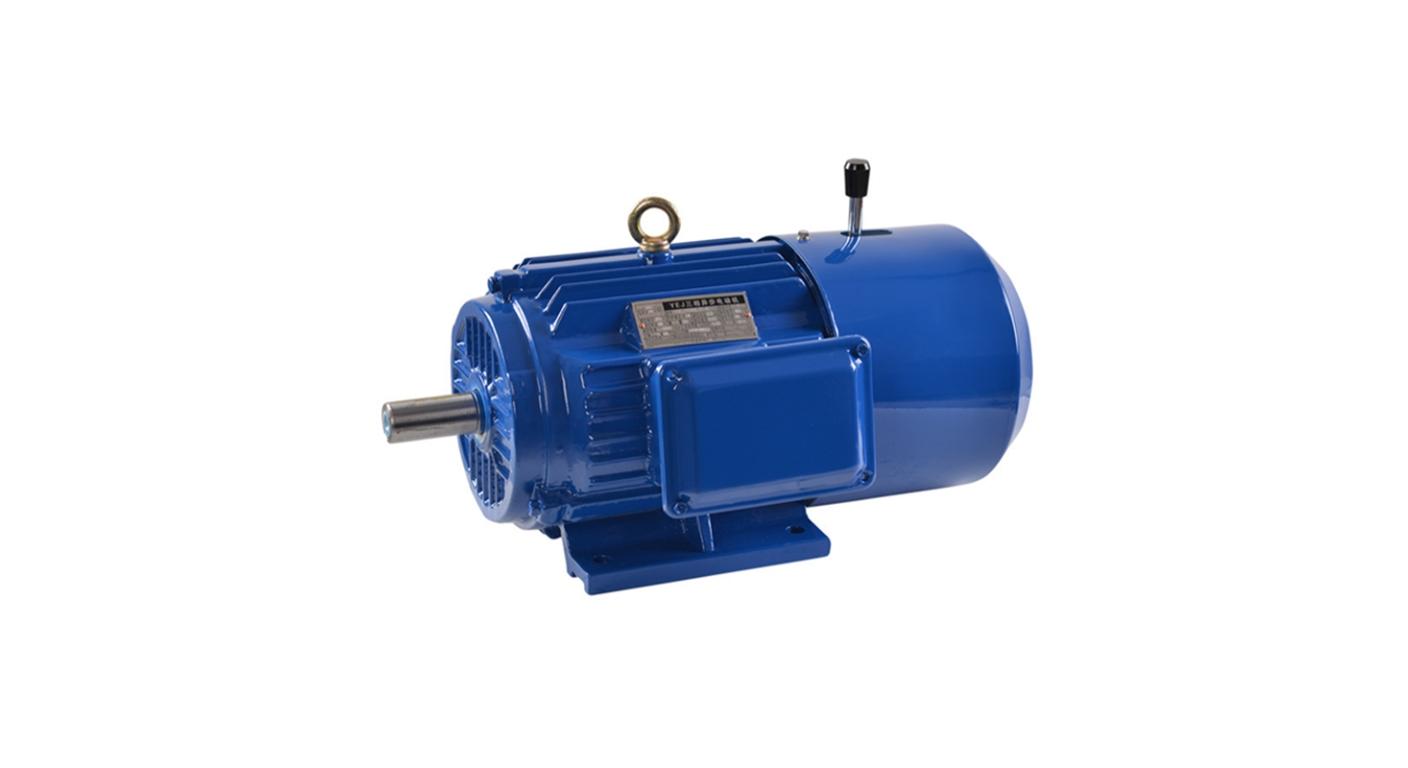
Rechthoek tandwielmotor: Bijpassende elektrische voeding, Variabele snelheid en remmen
26 okt, 2026
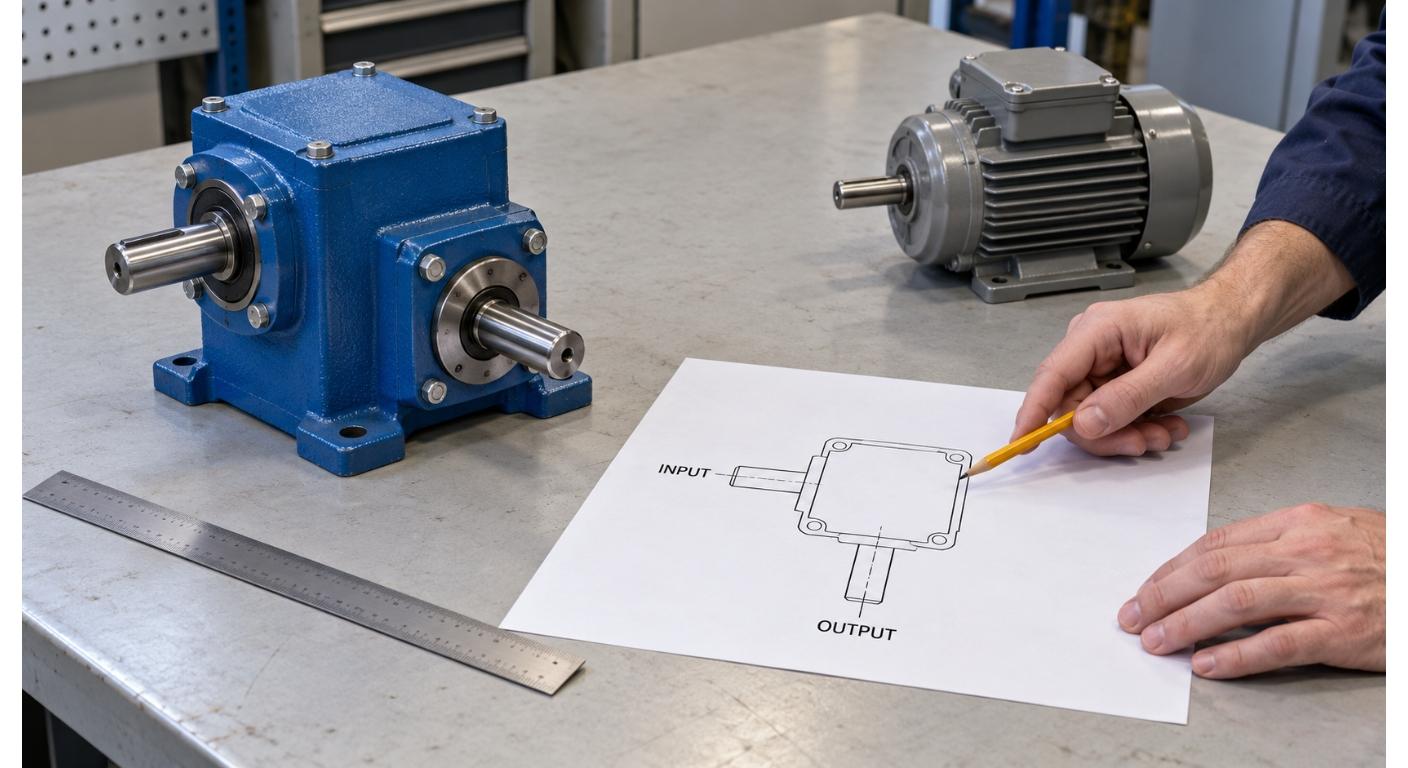
Plannen van een installatie van een afschuiningsreducer: Maak van asvereisten een praktische aandrijfindeling
26 okt, 2026
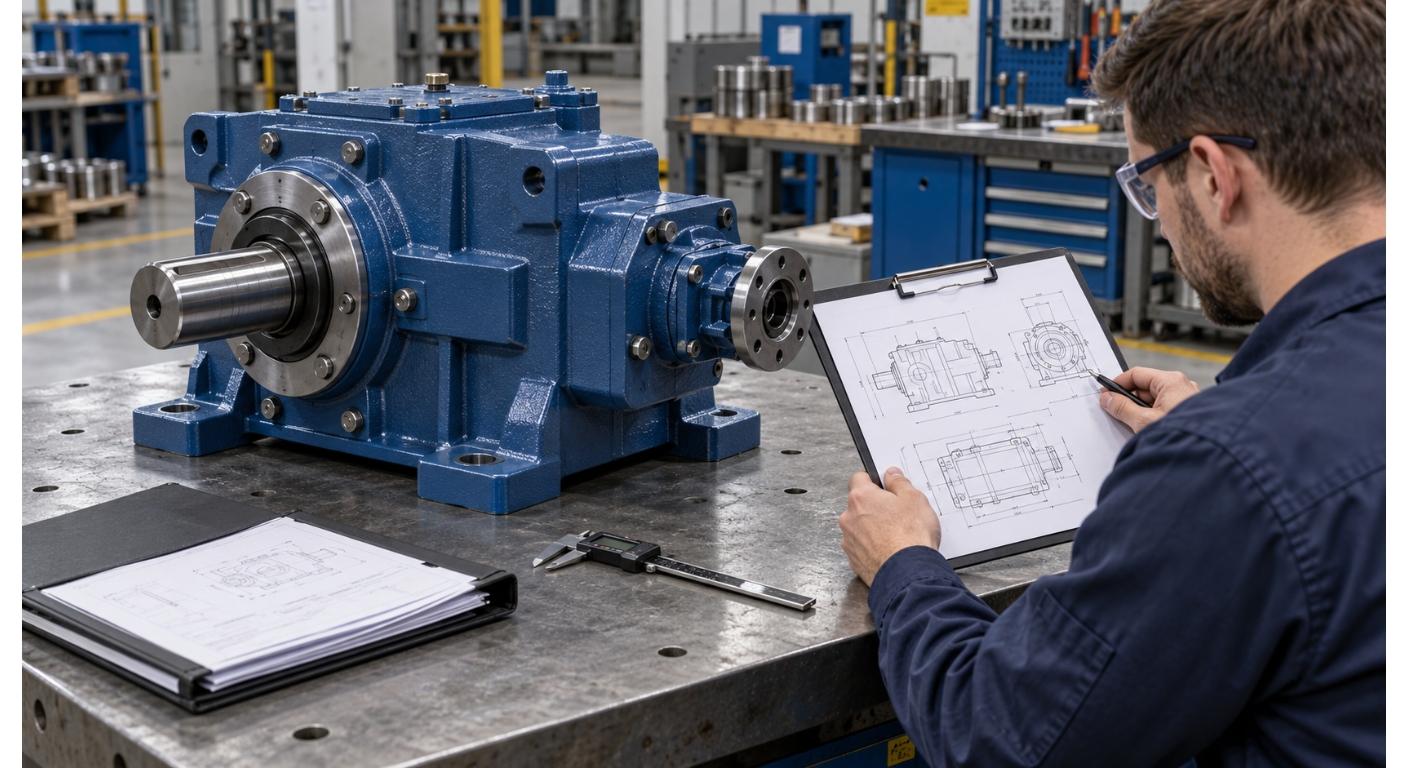
Het kiezen van een bovenliggende kraanversnellingsbak op basis van de hijs- of reisfunctie
26 okt, 2026
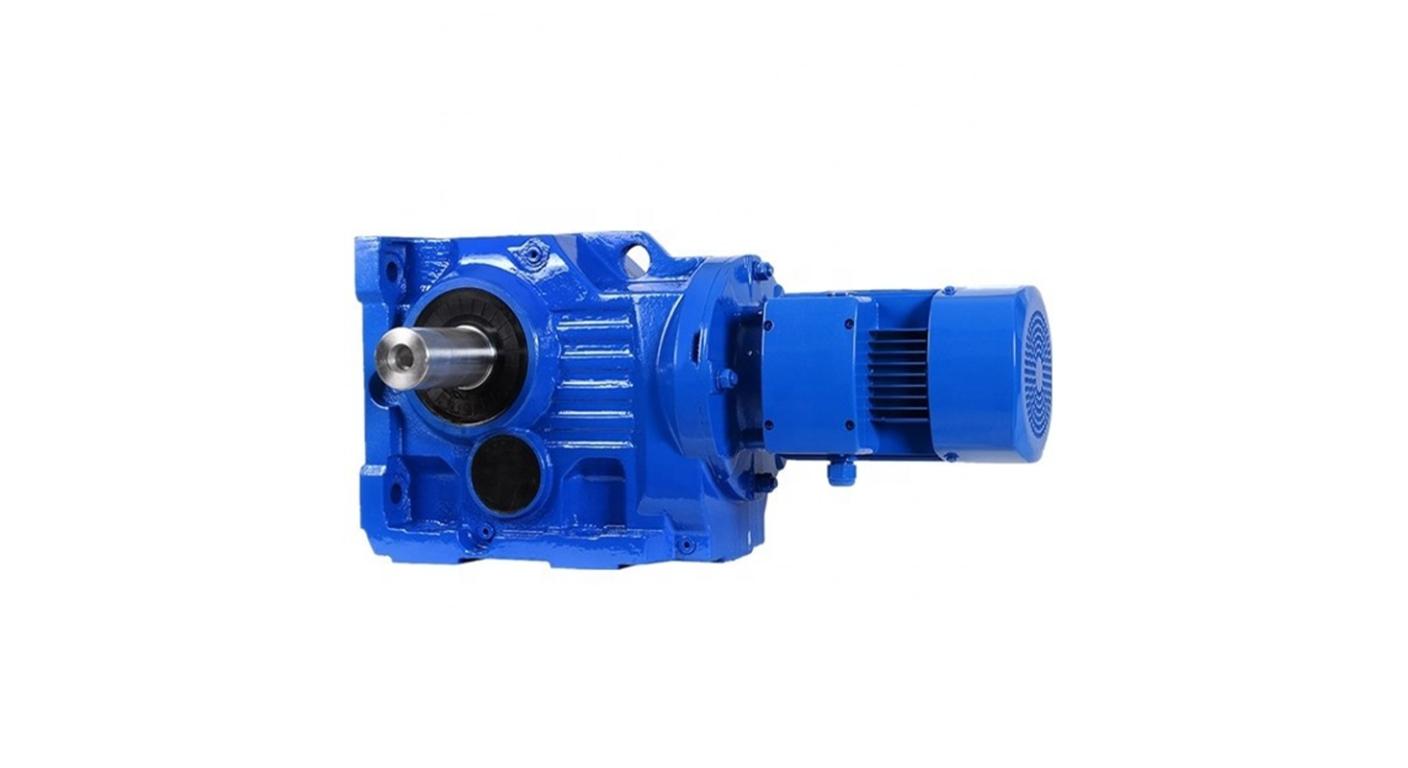
Vervanging van een industriële wormversnellingsbak: Wat te behouden en wat te heroverwegen
25 okt, 2026
AC gear motors are usually the better choice for mains-powered, continuous industrial duty, especially when three-phase supply, robust operation and low routine maintenance matter. DC gear motors are often better for battery-powered, low-voltage or compact equipment that needs convenient variable-speed control. The correct choice depends on supply, output torque and speed, Startbelasting, Duty cycle, environment and control requirements.
AC-tandwielmotor versus DC-tandwielmotor: Het korte antwoord
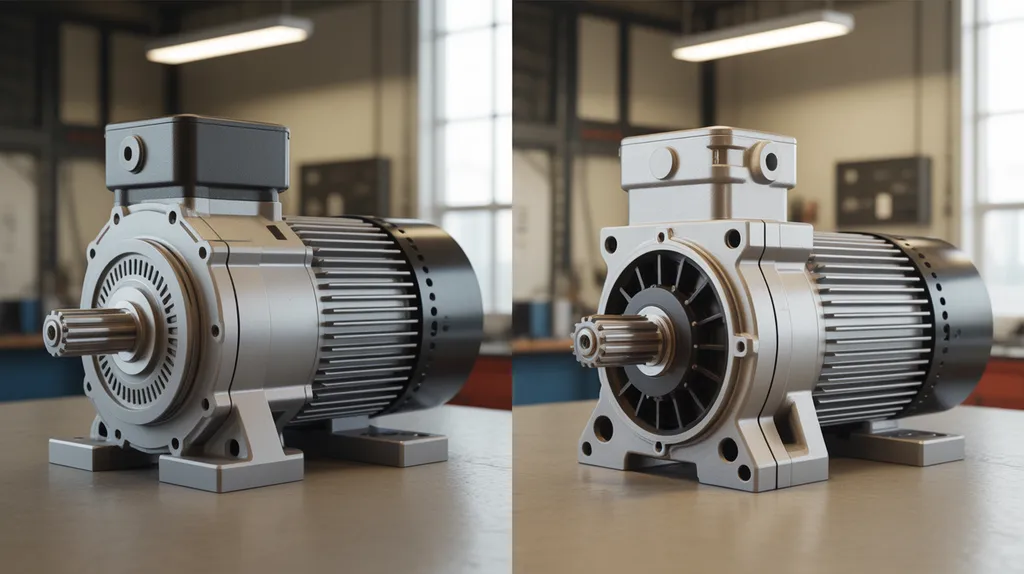
Kies een three-phase AC gear motor when a machine is connected to an industrial electrical supply and must run continuously, such as a conveyor, Mixer, packaging machine or material-handling system.
Kies een Gelijkstroomversnellingsmotor when the equipment uses a battery or low-voltage DC supply, or when compact variable-speed operation is a central requirement. Neither motor type is universally superior. The gearbox, Controller, Laad, duty cycle and operating environment also determine the correct choice.
For the broader specification process, see this Koopgids voor versnellingsreductiemotoren.
Wat is een AC-tandwielmotor?
Een AC gear motor combines an alternating-current motor with a gearbox. The motor converts electrical energy into rotation, while the gearbox reduces output speed and increases available output torque according to its transmission ratio.
Alternating current periodically reverses direction. Industrial AC gear motors are commonly based on induction-motor designs, with either single-phase or three-phase power supplies.
Single-phase versus three-phase AC gear motors
A Driefasige inductiemotor uses phase offsets to create a rotating magnetic field and is self-starting. A true single-phase motor does not produce starting torque without an additional starting method, according to Groschopp’s AC motor technical explanation.
This difference matters when specifying equipment:
- Three-phase AC: Commonly considered first for continuous industrial machinery with an available three-phase supply.
- Single-phase AC: Useful where only single-phase supply is available, subject to the motor’s starting and load requirements.
- Variable-speed AC: Commonly controlled with a variable-frequency drive, which changes the frequency supplied to the motor.
An induction motor’s actual rotor speed differs from synchronous speed because of Slip, the difference between the rotating magnetic field’s speed and the rotor’s speed. Changing the speed of an induction motor generally requires changing the supply frequency.
How the gearbox changes AC motor output
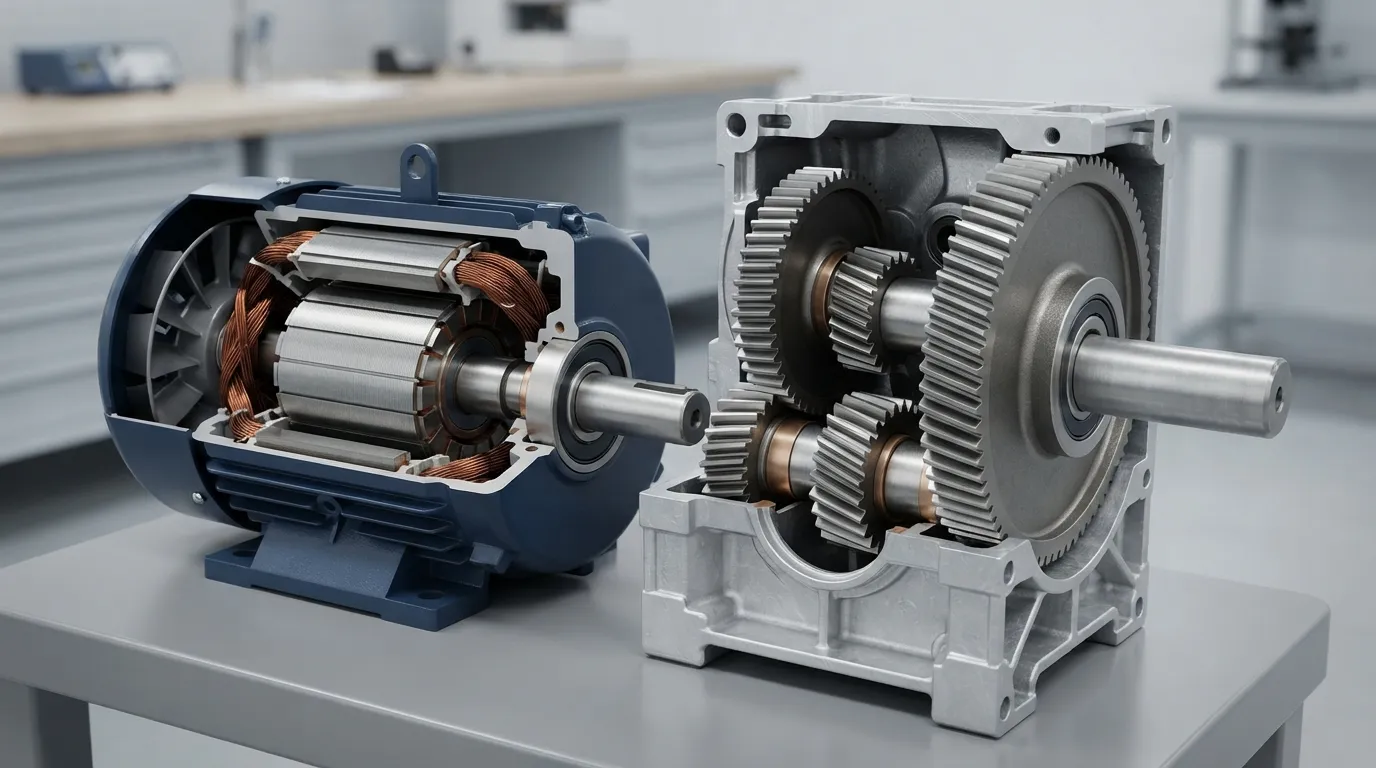
The motor may rotate at a relatively high speed while the machine requires slower rotation at the output shaft. The gearbox supplies the required reduction ratio, lowering output speed and increasing available output torque.
The selected AC gear motor must therefore be matched to the machine’s required Uitgangssnelheid, not only the motor’s rated speed. Overbrengingsverhouding, Belastingskoppel, starting load and duty cycle all affect the selection.
What Is a DC Gear Motor?
A Gelijkstroomversnellingsmotor combines a direct-current motor with a gearbox. Direct current flows in one direction, and the motor uses that electrical input to create rotation. The gearbox converts high-speed, lower-torque motor output into lower-speed, higher-torque output.
DC gear motors are often practical when the available source is already DC, such as a battery or low-voltage power system. They are also used in compact equipment and applications where speed must be adjusted frequently.
When selecting a DC gear motor, Check:
- Supply voltage and current
- Vereiste uitvoersnelheid
- Vereist uitgangskoppel
- Overbrengingsverhouding
- Laadcapaciteit
- Duty cycle
- Montageopstelling
- Milieuomstandigheden
- Geluid en trillingen
- Controllercompatibiliteit
Brushed versus brushless DC gear motors
A geborstelde gelijkstroommotor uses brushes and a commutator to transfer electrical current to the rotating part of the motor. Brushed DC motors generally provide high starting torque, but the brushes and commutator require periodic inspection and maintenance.
A brushless DC motor uses electronic commutation instead of mechanical brushes. This removes brush wear, but the motor requires a compatible electronic controller. Startkoppel, speed range and control behavior still depend on the complete motor-and-controller system.
The term “DC gear motor” therefore does not identify one single construction. A brushed motor, brushless motor and controller-based drive should not be evaluated as though they have identical maintenance or performance characteristics.
AC-tandwielmotor versus DC-tandwielmotor: Zij-aan-zij vergelijking
Neither AC nor DC wins in every category. AC generally fits continuous, mains-powered industrial duty, while DC generally fits battery-powered, low-voltage and compact variable-speed equipment.
| Selectiecriterium | AC gear motor | Gelijkstroomversnellingsmotor | Wat te verifiëren |
|---|---|---|---|
| Stroomvoorziening | Alternating-current supply; single-phase or three-phase depending on motor design | Direct-current supply, commonly from a battery or DC power system | Spanning, Huidig, phase and frequency |
| Typische taak | Continuous plant machinery and fixed-speed industrial equipment | Battery-powered, portable, compact or variable-speed equipment | Duty cycle, starts per hour and operating hours |
| Snelheidsregeling | Commonly uses a variable-frequency drive for induction motors | Commonly varies supplied voltage or current; brushless types require electronic control | Required speed range and controller compatibility |
| Startkoppel | Depends on motor type, phase configuration, controller and load | Brushed DC motors generally provide high starting torque | Startkoppel, acceleration and gearbox ratio |
| Routine maintenance | Induction AC motors generally have fewer wear components | Brushed DC motors require brush and commutator maintenance; brushless designs have different controller requirements | Brushes, Lagers, Versnellingsbak, seals and environment |
| Battery compatibility | Requires suitable power conversion equipment if the source is DC | Directly suited to DC power systems when voltage and current match | Battery voltage, capacity and controller |
| Continue werking | Often a practical starting point for three-phase industrial duty | Must be matched carefully to motor design, cooling and controller | Rated duty and thermal conditions |
| Purchase and lifecycle cost | Includes motor, Versnellingsbak, starter or variable-frequency drive, wiring and maintenance | Includes motor, Versnellingsbak, Controller, battery or power supply and maintenance | Complete system cost, energy and downtime |
| Output performance | Determined by motor, Versnellingsbak, Ratio, load and control | Determined by motor, Versnellingsbak, Ratio, load and control | Output speed and torque at the shaft |
| Installatie | Requires correct phase, Frequentie, wiring and mounting | Requires correct polarity, Spanning, Huidig, controller and mounting | Nameplate and installation requirements |
How Does Speed Control Differ Between AC and DC Gear Motors?
DC gear motor speed can commonly be adjusted by varying supplied voltage or current, while AC induction-motor speed is commonly changed by varying supply frequency with a variable-frequency drive. The required controller, speed range and load response must be checked for the specific motor.
AC speed control
An AC induction motor’s speed is related to supply frequency. A variable-frequency drive, or VFD, changes the frequency supplied to the motor so the motor can operate at different speeds.
Before selecting an AC gear motor for variable-speed operation, verifieer:
- Motor and VFD compatibility
- Supply phase and frequency
- Required minimum and maximum speed
- Starting and acceleration requirements
- Load torque across the speed range
- Cooling and enclosure conditions
- Whether the gearbox is suitable for the intended operating range
A fixed-speed conveyor may not require the same control arrangement as a mixer that must operate across several speeds and load conditions.
DC speed control
DC motor speed can commonly be controlled by changing the supplied voltage or current. A brushless DC gear motor requires an electronic controller that manages commutation and speed.
DC speed control can be convenient in battery-powered equipment, but the controller remains part of the drive system. Incorrect voltage, current limits or controller compatibility can cause poor starting, overheating or unstable operation.
| Application requirement | Likely control approach | Main checks |
|---|---|---|
| Fixed-speed industrial conveyor | AC motor with suitable starting arrangement | Supply, Laad, duty and output speed |
| Variable-speed conveyor | AC motor with a VFD or suitable DC motor and controller | Speed range, torque and acceleration |
| Battery-powered actuator | DC gear motor with compatible controller | Battery voltage, current and duty |
| Mixer with changing load | Three-phase AC gear motor with suitable control may be considered first | Startkoppel, load inertia and speed range |
| Compact low-power machine | DC gear motor may be practical | Available voltage, controller size and thermal limits |
Which Has Higher Starting Torque: AC of DC?
Brushed DC motors generally provide high starting torque, but starting torque is not determined by AC or DC alone. Motor construction, Controller, Versnellingsbakverhouding, load inertia and starting method all affect the torque available at the output shaft.
AC motor type also matters. According to Groschopp’s technical explanation, three-phase induction motors are self-starting and are described as having higher starting torque than single-phase motors. That does not mean every three-phase AC gear motor will outperform every DC gear motor in a particular machine.
Before choosing a motor for a high-starting-load application:
- Determine whether the load starts under full load.
- Identify the required output torque at startup.
- Check load inertia and required acceleration time.
- Confirm the gearbox ratio and output-shaft torque.
- Check the controller, starter or VFD settings.
- Confirm the motor’s duty cycle and thermal requirements.
A motor selected only by rated power may fail to start a heavily loaded conveyor or mixer. The starting condition must be considered separately from the normal running condition.
Onderhoud, Reliability and Operating Duty
Brushed DC gear motors require periodic inspection or replacement of brushes and commutators, while induction AC motors generally have fewer wear components and lower routine maintenance. Both AC and DC gear motors still require attention to bearings, gearbox condition, Montage, SEALs, load and operating environment.
Continuous industrial duty
Three-phase AC is generally the starting point for mains-powered, continuous industrial machinery. Transportbanden, Mixers, packaging equipment and material-handling systems may operate for long periods, making motor duty, Koeling, gearbox service and maintenance access important.
This is a selection direction, not a guarantee of suitability. The final motor must match the actual load, Openingstijden, Starts en stops, Snelheidsbereik, environment and required output torque.
Battery and intermittent duty
DC is often the more direct choice when the machine already operates from a battery or low-voltage DC source. Batterij-aangedreven apparatuur, mobile machinery and compact actuators can avoid unnecessary conversion from DC to AC.
Toch, battery operation requires checking available voltage, Huidig, battery capacity, controller limits and duty cycle. A DC motor is not automatically suitable simply because the equipment has a battery.
| Bedrijfstoestand | AC considerations | DC considerations | Required verification |
|---|---|---|---|
| Continuous plant operation | Three-phase AC may be a practical starting point | Confirm motor, controller and cooling suitability | Duty rating, thermal conditions and maintenance |
| Intermittent operation | Check starting frequency and acceleration | Check peak current and heating during repeated starts | Starts per hour and cycle time |
| Battery operation | May require power conversion equipment | Directly compatible when voltage and current match | Battery, controller and motor ratings |
| Dust or moisture exposure | Check enclosure and installation conditions | Check enclosure, controller location and seals | Environmental conditions and ingress protection requirements |
| Frequente starts en stops | Check starting method and VFD behavior | Check peak current and controller response | Startkoppel, acceleration and heating |
| Variable-load operation | Check VFD range and available torque | Check controller response and battery current | Torque across the complete speed range |
The gearbox also needs appropriate service and inspection. Do not assume that choosing a different motor current type eliminates gearbox lubrication, Richting, seal or alignment requirements.
Which Costs More: an AC or DC Gear Motor?
Purchase price cannot be determined from AC or DC alone. A fair comparison includes the motor, Versnellingsbak, controller or variable-frequency drive, wiring, Installatie, Onderhoud, energy use and the potential cost of downtime.
| Lifecycle-cost category | AC gear motor questions | DC gear motor questions |
|---|---|---|
| Motor and gearbox | What motor type, ratio and output rating are required? | What motor type, ratio and output rating are required? |
| Controller or drive | Is a starter, VFD or other control equipment required? | Is a DC controller or brushless commutation controller required? |
| Power system | Is three-phase or single-phase supply available? | Is the battery or DC supply adequate for peak current? |
| Installatie | Are phase, Frequentie, wiring and mounting correct? | Are voltage, polarity, wiring and controller settings correct? |
| Routine maintenance | What maintenance is required for the motor and gearbox? | Are brush and commutator service required, or is the motor brushless? |
| Energy use | How will operating hours and load affect energy consumption? | How will controller and battery losses affect operating time? |
| Replacement and downtime | How quickly can the motor, drive or gearbox be serviced? | How quickly can the motor, controller or battery system be serviced? |
A lower initial purchase price does not automatically mean lower lifecycle cost. The correct comparison is the complete drive system under the machine’s actual duty.
Which Type Is Best for Common Applications?
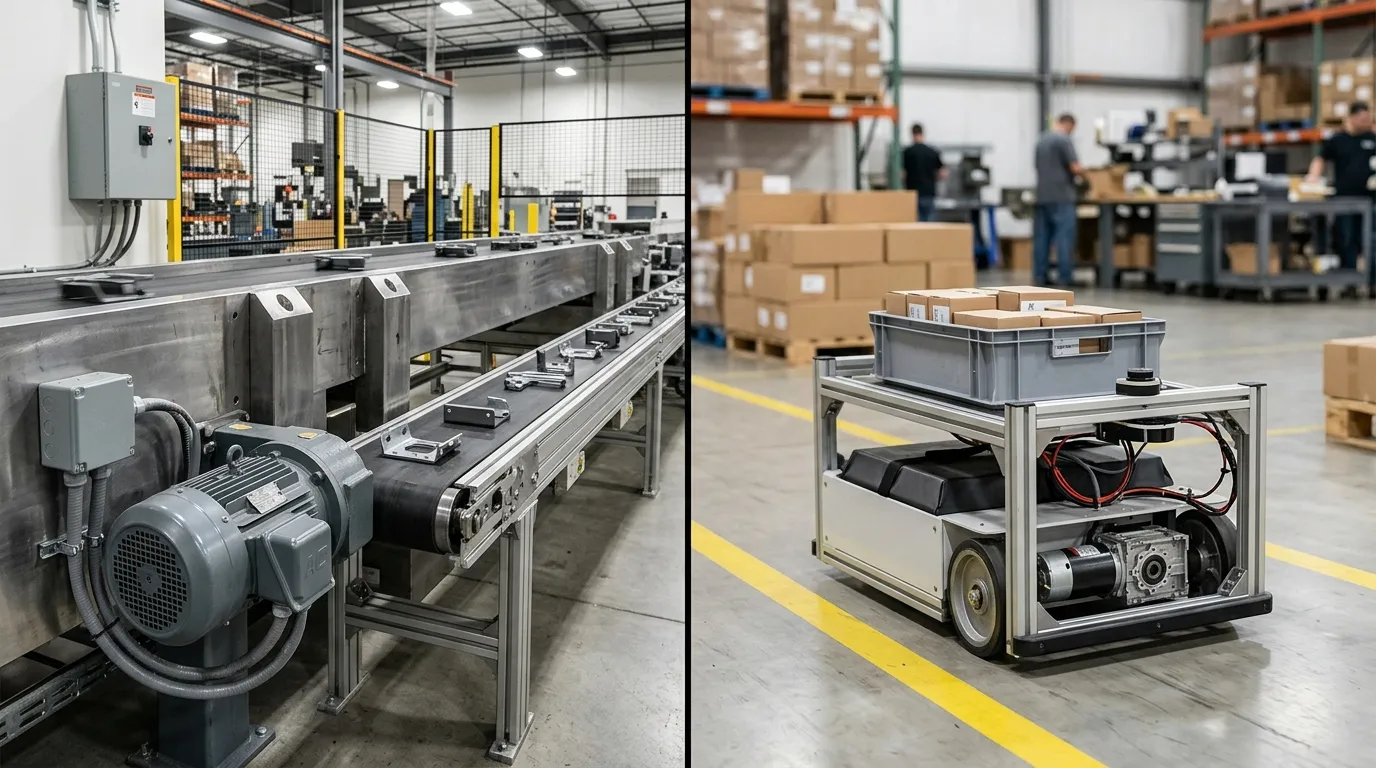
Select the motor type from the available power source and duty first, Controleer dan het koppel, Snelheid, control and environment. Three-phase AC is generally the starting point for continuous plant machinery, while DC is generally the starting point for battery-powered or low-voltage variable-speed equipment.
| Toepassing | Likely first choice | Reden | Voorwaarden die de keuze kunnen veranderen |
|---|---|---|---|
| Continuous conveyor | Three-phase AC gear motor | Mains-powered continuous operation is a typical industrial requirement | Battery operation, unusual speed range or limited supply |
| Packaging machine | AC of DC, depending on machine architecture | Supply, cycle rate and control requirements vary | Compact formaat, frequent speed changes or battery operation |
| Industrial mixer | Three-phase AC gear motor may be considered first | Starting load and continuous industrial duty are important | High starting inertia, special speed profile or available DC supply |
| Plastics or rubber machinery | Industrial AC gear motor may be considered first | Plant power and continuous operation are common considerations | Machine-specific control, space or speed requirements |
| Battery-powered mobile equipment | Gelijkstroomversnellingsmotor | The available power source is already DC | High power, long duty or conversion requirements |
| Compact actuator | DC gear motor may be practical | Low-voltage supply and compact variable-speed control may matter | Benodigd koppel, duty cycle or environmental exposure |
| Variable-speed low-power machine | DC gear motor may be practical | Voltage or current control can suit some low-power systems | Required speed range, controller availability and thermal limits |
| Mijnbouw, Cement, power or port equipment | Three-phase AC gear motor may be considered first | Continuous industrial duty and plant supply are common factors | Harde omgeving, load profile and installation requirements |
The application table provides a starting direction, Geen vervanging voor maatvoering. A conveyor with a heavy starting load may require a different selection from a light conveyor with a constant load.
How to Choose Between an AC and DC Gear Motor
Choose the gear motor by working through supply, Uitgangssnelheid, Uitgegeven koppel, Startbelasting, Duty cycle, Controle, environment and mounting requirements. Do not select only by motor power or voltage.
- Identify the available supply.
Determine whether the machine has three-phase AC, single-phase AC, battery DC or another DC source.
- Definieer de vereiste uitvoersnelheid.
Specify the gearbox output speed in revolutions per minute. Do not confuse the motor’s speed with the speed required at the machine shaft.
- Define continuous and starting output torque.
State the required torque in newton-metres during normal operation and at startup. Readers who need help defining speed and torque can review Welke maat tandwielmotor.
- Check acceleration, inertia and duty cycle.
Identify whether the load starts under load, how quickly it must accelerate, how often it starts and how long it runs during each cycle.
- Select the control method.
Confirm whether the application needs a starter, variable-frequency drive, DC controller or brushless commutation controller.
- Check the operating environment.
Denk aan stof, Vocht, Temperatuur, Geluid, Trillingen, cleaning conditions and the location of the controller.
- Confirm mounting and transmission requirements.
Controleer de afmetingen van de montage, Asopstelling, transmission ratio and available installation space.
- Compare complete lifecycle cost.
Include the motor, reducer, Controller, wiring, Onderhoud, energy use and possible downtime.
- Confirm the motor and reducer as a matched system.
The selected motor, Versnellingsbak, ratio and controller must work together at the required speed, torque and duty.
The distinction between an integrated gear motor and separate components is explained in Tandwielmotor versus versnellingsbak. For wider motor-selection factors, Zie how to choose industrial electric motor.
Common selection mistakes
- Choosing by motor wattage alone.
- Confusing motor speed with gearbox output speed.
- Ignoring starting load or load inertia.
- Ignoring duty cycle and starts per hour.
- Selecting a controller before confirming motor compatibility.
- Assuming every DC gear motor is brushed.
- Assuming AC speed cannot be controlled.
- Comparing motor purchase prices without including the controller and power system.
- Ignoring mounting dimensions, shaft arrangement or gearbox ratio.
- Treating a general application recommendation as a confirmed motor size.
A gear motor may be only one part of the machine’s drive arrangement. Readers comparing a complete gear motor with a standalone motor can also review gear motor vs electric motor.
Final Decision Rule
Kies een three-phase AC gear motor when the machine has mains power and must operate continuously for industrial duty. Kies een Gelijkstroomversnellingsmotor when the machine uses a battery or low-voltage DC supply, or when compact variable-speed operation is central.
For either choice, verify output torque, Uitgangssnelheid, Startbelasting, Duty cycle, Besturingsmethode, Milieu, mounting dimensions and transmission ratio. A helical transmission option is covered in Helical tandwielmotor.
Mingye ontwerpt en produceert motoren en reductoren in haar eigen CNC-fabriek met modulaire basis, Gestandaardiseerde ontwerpen. For OEM applications, Mingye can customize mounting dimensions and transmission ratios; contact the team to discuss the requirements of a conveyor, Mixer, Verpakkingsmachine of andere industriële aandrijving.
Veelgestelde vragen
Are DC motors better than AC motors?
Neither motor type is universally better. AC gear motors usually fit mains-powered, continuous industrial duty, while DC gear motors often fit battery-powered, low-voltage or compact variable-speed equipment. Laad, Duty cycle, Controller, maintenance requirements and complete system cost determine which option is more suitable.
How do I tell if a gear motor is AC or DC?
Check the nameplate for the voltage, current type, phase and frequency. The wiring and controller can provide additional clues, but appearance alone is unreliable. Confirm the model data with the manufacturer before connecting power, especially when replacing an existing gear motor or changing its controller.
What are common problems with DC gear motors?
Common issues include brush and commutator wear in brushed designs, controller incompatibility, incorrect voltage, excessive load, overheating and insufficient starting torque. Gearbox wear, bearing problems, poor mounting and unsuitable duty can also affect performance. Brushless DC motors have different controller and electronic-commutation requirements.
Which gear motor is best for a conveyor?
A three-phase AC gear motor is generally a practical starting point for a mains-powered conveyor intended for continuous industrial operation. The final selection still depends on conveyor load, Startkoppel, Uitgangssnelheid, Duty cycle, Milieu, mounting arrangement and whether the conveyor requires variable-speed control.
Can an AC gear motor run at variable speed?
Ja. AC induction gear motors can commonly use a variable-frequency drive to change the frequency supplied to the motor and adjust speed. The motor, VFD, Versnellingsbak, Belastingskoppel, cooling and required speed range must be compatible. AC variable-speed operation should not be assessed by frequency alone.
Deel op Social:


Neem contact met ons op
In dit artikel
Rechthoek tandwielmotor: Bijpassende elektrische voeding, Variabele snelheid en remmen
26 okt, 2026
Plannen van een installatie van een afschuiningsreducer: Maak van asvereisten een praktische aandrijfindeling
26 okt, 2026
Het kiezen van een bovenliggende kraanversnellingsbak op basis van de hijs- of reisfunctie
26 okt, 2026
Vervanging van een industriële wormversnellingsbak: Wat te behouden en wat te heroverwegen
25 okt, 2026